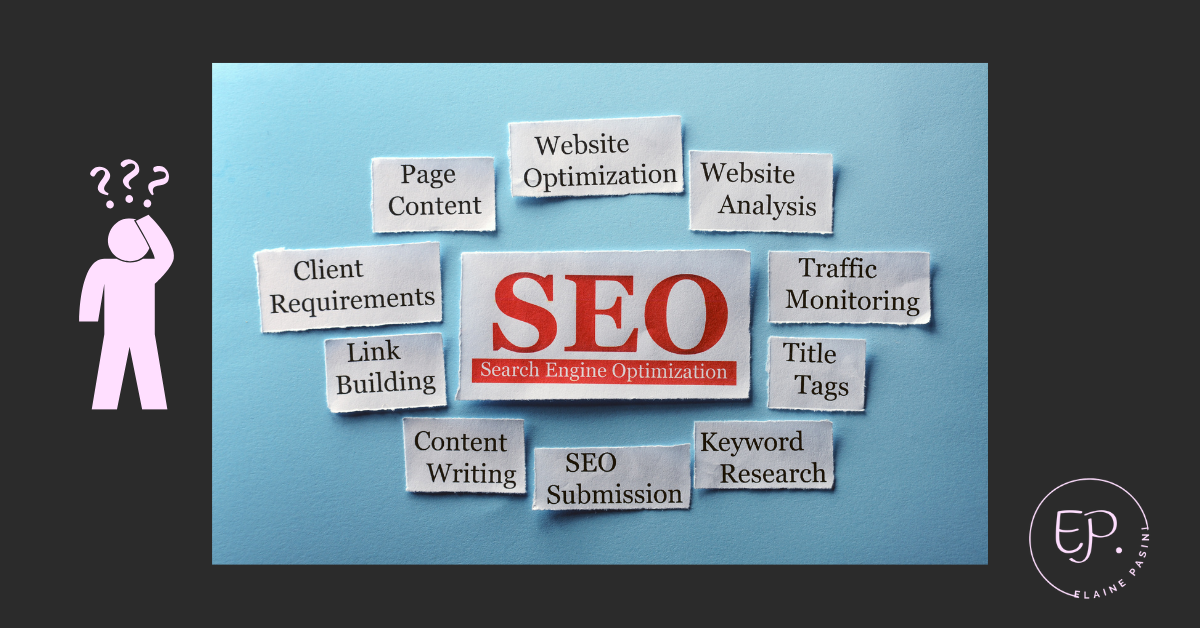
Search engine optimization (SEO) is like having a spotlight that shines directly on your business in the massively busy and noisy world of the internet.
Being at the top of search results (SERPs) isn’t just about getting more clicks to your website, it’s about creating a perception of experience, expertise, authority, and trustworthiness.
How to write to get found in an online search
When your website consistently appears at the top of search results, it signals to users (and potential clients) that your business is a leader in your profession and sector. People are more likely to trust and choose businesses that are prominently visible. More than that however, having SEO best practices in place means that your website provides valuable and relevant information, enhancing the user experience (UX).
Google’s John Mueller (Senior Webmaster Trends Analyst and Search Relations Team Lead) replied to a Reddit user’s question regarding online content length and which types of content get the most reach and clicks:
“There is no universally ideal content length. Focus on bringing unique value to the web overall, which doesn’t mean just adding more words….. If you’re looking for a mechanical recipe for how to make something useful, that will be futile – that’s just not how it works, neither online nor offline. When you think about the real-world businesses near you that are doing well, do you primarily think about which numbers they focus on, or do you think about the services that they provide?”
What John is saying is that helpful and authoritative content is paramount. Where does your target audience check you out? Does your website offer supportive articles that answer their queries? Do you link your content from your website to social media platforms? Do you market research and don’t focus on the numbers in your spreadsheets. Don’t get me wrong, I love Google Analytics 4 (GA4) because as a marketer it helps me measure website traffic to understand the strategies in place are working and if they’re not working then those strategies can be tweaked.
Does your competitor come up higher in a search result?
Knowing what you want your website for should be a question asked with your Head of Marketing and Business Development.
If you are happy for a low-cost site that has a nice design but isn’t optimised and has no user experience or accessibility, then be aware that the content won’t be cited by GenAI prompts or come up in a Google or Bing (or other search engine!) search results page. That decision is absolutely fine, along as you know that you decided you just wanted a “business card online” feel.
However, if you want your website to show your services, your content, your quality and authority in your field of expertise and be a trusted resource for citations and references, then SEO is your baby.
Websites that incorporate a thought out UX and content strategy, that shows Google it aligns with accessibility within the Equality Act 2010, can lead to increased credibility, as search engines prioritize sites that offer high-quality content, fast loading times, and responsive designs. It sends a message that your business is professional, current, and dependable. In essence, an SEO-optimized website is an effective tool for positioning your law firm, or professional business as a trusted authority, standing out among competitors, and creating a solid foundation for ongoing growth and success.
What about GenAI?
When your website ranks highly in the search results, it can become a go-to source for GenAI searches and responses. This means your insights and expertise could be referenced in AI-generated content, further establishing your business as an authority. This visibility not only attracts potential customers but also positions your firm as a trusted resource that others in your industry might cite. Nice right?
How does SEO work with other marketing activities?
A great law firm will not only have impeccable technically skilled lawyers, but their marketing department should be working on a range of strategies to complement business development.
Search engine optimisation (SEO), social media marketing, and email marketing are three pillars of a robust digital marketing strategy that I regularly work on with clients.
When these components work in harmony, they amplify each other’s strengths. This is how:
SEO’s synergy with Social Media Marketing:
Social media platforms can drive traffic to your optimised website, creating more opportunities for engagement and conversions. When your SEO content is shared on social media, it increases visibility and attracts engagement and others citing that content in their links (how often do you find yourself emailing, sending a Teams message, or WhatsApping colleagues and friends links to articles, YouTube videos etc?). This is a way of boosting your own website’s search engine rankings.
SEO and the power of Email Marketing:
Email marketing helps nurture relationships with existing clients and any hot leads by delivering tailored content straight to their inboxes. Don’t forget to use segments and funnels in your email marketing by the way! Anyway, linking your emails with your optimised content increases web traffic clicks and of course, engagement. You want your content to get shared right? The more it’s shared, clicked on, read and then even better, have those readers click on internal links in that same share, is gold dust. It all shows that your content is something that resounds with your readers and audience. It expands your reach.
SEO and Website Traffic Tracking:
I know I’m an SEO nerd and love analysing and reading tools such as Google Analytics (GA4) to track website traffic, but the overview for non-analytics is relatively simple to read and measure. The fancy spreadsheets provide valuable insights into your audience’s behaviour. Understanding which channel (for example an organic search, social media, or email campaigns) is driving the most traffic to each landing page allows your marketing team to refine and thereafter improve your marketing strategies.
All the above elements, when working together, create a cohesive approach to digital marketing, which of course enhances your firm’s online presence which in turns drives a long term and sustained business growth. Always use these strategies hand in hand with your offline marketing efforts and business development + client relationship goals.
If you want to chew my ear or grab an hour of my time to explain effective solutions, just give me a call or email me.
Elaine
Leave a Reply